Animal Feed Pellet Production Line Price & Daily Maintenance Guide

Entering the animal feed production industry requires a solid understanding of equipment investment and operational costs. For entrepreneurs and agricultural businesses considering this venture, the price of the production line and its daily maintenance are two fundamental concerns. This guide from Yuhheng Technology Co., Ltd. provides a clear breakdown to help you evaluate your investment.

How Much Does an Animal Feed Pellet Production Line Cost?

The cost of an animal feed pellet production line varies significantly based on capacity, automation level, and the specific formula you plan to produce (e.g., poultry, livestock, or aquatic feed). Higher capacity and automation lead to a greater initial investment but also higher long-term efficiency.

Here is a general overview of the price ranges:

Key Price Ranges:

  • Small-Scale / Starter Line: A semi-automatic line with a capacity of 1-2 tons per hour, suitable for small farms or local cooperatives. This typically includes a grinder, mixer, pellet mill, and cooler. The investment can start from $20,000 to $50,000.
  • Medium-Scale Commercial Line: A popular choice for dedicated feed mills. This automatic line with a capacity of 3-5 tons per hour includes hammer mills, screw conveyors, conditioning bins, pellet mills, coolers, crumblers, and automatic packaging machines. Prices for this complete setup typically range from $60,000 to $150,000.
  • Large-Scale Industrial Plant: For high-volume production (10+ tons per hour) with full PLC automation, precision batching systems, fat coating systems, and advanced packaging lines, the investment can range from $200,000 to $500,000 or more.

Factors That Influence the Total Cost:

  • Raw Material Formulation: Harder materials like corn or soy require more powerful (and expensive) crushers and pellet mills.
  • Pellet Mill Die Size and Power: The capacity and motor power of the pellet machine itself are major cost drivers.
  • Automation Level: PLC control systems for automatic batching and sequencing add cost but improve consistency and reduce labor.
  • Auxiliary Equipment: The need for additional equipment like counterflow coolers, fat sprayers, or crumblers will affect the final price.

Is Daily Maintenance Complicated?

The daily maintenance of an animal feed pellet line is systematic and manageable. It is not considered overly complicated but requires consistency and attention to detail to ensure smooth operation, prevent breakdowns, and maintain pellet quality.

Essential Daily Maintenance Tasks:

  1. Thorough Cleaning: This is the most critical daily task. Residual feed powder in the mixer, conveyors, coolers, and especially the pellet mill die and rollers can harden, attract pests, and cause cross-contamination between batches. A complete clean-out after each production run is essential.
  2. Lubrication: All bearings on motors, conveyors, the pellet mill, and other moving parts require regular greasing according to the manufacturer’s schedule to prevent wear and ensure smooth operation.
  3. Inspection and Adjustment:
    • Pellet Mill Die and Rollers: Check for wear and proper tension. This is the heart of the operation and must be in optimal condition to produce quality pellets.
    • Hammer Mill Screens and Hammers: Inspect for wear and tear to maintain proper grinding efficiency.
    • Belts and Transmissions: Check for proper tension and signs of wear.
  4. Conditioning Check: Ensure the steam conditioning system is functioning correctly to provide the right temperature and moisture for effective pelleting.

What Makes Maintenance Manageable?

  • Predictable Schedule: Maintenance follows a clear, repeatable routine. Once established, it becomes a standard part of the workflow.
  • Robust Design: High-quality lines from Yuhheng Tech are built for industrial durability and designed with accessibility in mind, making daily checks and cleaning easier.
  • Focused on Prevention: The daily tasks are preventative, designed to catch small issues before they lead to costly downtime or poor product quality.

In summary, while daily upkeep is required, it is a straightforward process of cleaning, lubricating, and inspecting. The effort is a necessary and valuable practice to protect your investment and ensure consistent, high-quality feed production.
Get Your Customized Feed Pellet Solution from Yuhheng Tech

Choosing the right production line is key to your profitability. At Yuhheng Technology Co., Ltd., we specialize in designing complete feed pellet production solutions tailored to your specific raw materials, target animals, and production goals.

We provide:

  • Expert Consultation: We help you select the right capacity and configuration to maximize your ROI.
  • Transparent Quotation: A detailed price breakdown based on your needs, with no hidden costs.
  • Comprehensive Training & Support: We ensure your team is fully trained on operation and maintenance procedures, and we provide reliable after-sales support.

Contact Yuhheng Tech today for a free consultation and a detailed quotation. Let us help you build a efficient and profitable animal feed production business with the right equipment and expert support.
Chicken Manure Fertilizer Production Line Price & Daily Maintenance Guide

Transforming chicken manure into valuable organic fertilizer is a smart business decision for poultry farms and agricultural entrepreneurs. Two of the most pressing questions for anyone considering this venture are about the initial investment and the ongoing operational effort. This guide from Yuhheng Technology Co., Ltd. will provide clear, practical answers to both.

How Much Does a Chicken Manure Fertilizer Production Line Cost?

The cost of a production line specifically designed for chicken manure is highly variable. It depends primarily on the scale of your operation and whether you aim to produce powdered or granular fertilizer. Granulation lines are more complex and therefore more expensive.

Here is a general overview of the investment required:

Key Price Ranges:

  • Small-Scale Powder Line: A basic, semi-automatic line focused on producing powdered fertilizer, ideal for a single farm or a small startup. With a capacity of 1-2 tons per hour, the investment can start from $30,000 to $60,000.
  • Standard Granular Line: This is the most common commercial choice. A complete automatic line that includes fermentation, crushing, granulation, drying, cooling, and packaging. For a capacity of 3-5 tons per hour, prices typically range from $80,000 to $170,000.
  • Large-Scale Granular Plant: For high-volume, industrial-level production (10+ tons per hour) with full PLC automation, advanced odor control systems, and automated packaging lines, the investment can range from $250,000 to $600,000 or more.

Crucial Factors Influencing Your Specific Cost:

  • Pre-treatment & Fermentation: Chicken manure has high moisture and ammonia content. The required pre-treatment system (e.g., dewatering, mixing with bulking agents) and the size of the fermentation area (e.g., compost turners, fermenter tanks) significantly impact the total cost.
  • Corrosion Resistance: Chicken manure is corrosive. Equipment with stainless steel contact parts, while more expensive upfront, is a wiser long-term investment for durability.
  • Odor Control Systems: Investing in biofilters or other odor mitigation technologies adds to the cost but is often essential for environmentally compliant and community-friendly operation.

Is Daily Maintenance Complicated?

A chicken manure fertilizer production line requires consistent daily care, but it is not overly complex. The maintenance is largely preventative and revolves around hygiene and basic mechanical checks. The corrosive nature of the raw material makes diligent cleaning the top priority.

Essential Daily Maintenance Tasks:

  1. Thorough Cleaning: This is the most critical task. Residual chicken manure will harden and accelerate corrosion on equipment surfaces. The mixer, granulator, conveyor belts, and especially the screen mesh must be cleaned out after each shift to prevent clogging and cross-contamination.
  2. Lubrication: All moving parts with bearings (conveyors, crusher, granulator, dryer) need regular lubrication as per the manual to ensure smooth operation and protect against wear. Use grease that can resist washout.
  3. Visual Inspection: A daily walk-around is essential. Check for wear on vulnerable parts like crusher hammers, granulator dies, and screen meshes. Look for loose bolts, unusual vibrations, or noises that might indicate a problem needing early attention.

What Makes Maintenance Manageable?

  • Predictable Routine: The tasks are repetitive and quickly become part of a standard operating procedure. It’s about diligence, not technical complexity.
  • Robust Equipment Design: At Yuhheng Tech, we build our lines with easy access panels and designs that simplify cleaning and inspection, specifically considering the challenges of processing manure.
  • Professional Support: We provide comprehensive training for your team on these specific maintenance routines and offer readily available spare parts and remote support to minimize any potential downtime.

In summary, daily maintenance is a mandatory but straightforward process. The effort is a small price to pay for turning a waste product into a profitable, sustainable commodity.

Get Your Customized Chicken Manure Solution from Yuhheng Tech

Chicken manure has specific processing requirements. At Yuhheng Technology Co., Ltd., we specialize in designing tailored solutions that efficiently handle high moisture and corrosiveness, ensuring a high-quality final product and a strong return on investment.

We provide:

  • Expert Design: We engineer lines specifically for chicken manure, ensuring efficient dewatering, fermentation, and granulation.
  • Transparent Pricing: A detailed quotation based on your raw material analysis and production goals, with no hidden costs.
  • Lifetime Support: From installation and training to supply of spare parts, we are your long-term partner for success.

Contact Yuhheng Tech today for a free consultation and a custom quote. Let our experts help you build a profitable and environmentally sound fertilizer business from your chicken manure resources.

Organic Fertilizer Production Line Price & Daily Maintenance Guide

Investing in an organic fertilizer production line is a significant step toward sustainable agriculture and a profitable business. Two of the most critical questions potential investors ask are about the cost and the daily upkeep. This guide from Yuhheng Technology Co., Ltd. provides clear answers to help you plan your investment with confidence.

How Much Does an Organic Fertilizer Production Line Cost?

The price of an organic fertilizer production line is not a single figure; it varies greatly depending on the scale, level of automation, and the type of final product you aim to produce (powder or granules). Here is a general breakdown to give you a realistic idea of the investment required.

Key Price Ranges (Estimated):

  • Small-Scale Powder Line: A basic, semi-automatic production line designed for powdered fertilizer, with a capacity of 1-2 tons per hour, can start from $25,000 to $50,000. This is an ideal entry-point for farms or small startups.
  • Standard Granular Line: A more common choice for commercial production, this automatic line includes granulation, drying, cooling, and packaging. For a capacity of 3-5 tons per hour, prices typically range from $70,000 to $150,000.
  • Large-Scale Granular Plant: For high-volume production (10+ tons per hour) with full automation, advanced dust control, and sophisticated packaging, the investment can range from $200,000 to $500,000 or more.

Factors That Influence the Cost:

  • Capacity: Higher output requires larger, more powerful equipment.
  • Automation: Fully automatic lines with PLC control systems are more expensive than semi-automatic ones.
  • Equipment Material: Stainless steel components, recommended for corrosion resistance, add to the cost compared to carbon steel.
  • Process Complexity: A granular line is inherently more expensive than a powder line due to the additional machinery required (granulator, dryer, cooler).

Is Daily Maintenance Complicated?

A well-designed organic fertilizer production line from a reputable manufacturer like Yuhheng Tech is built for reliability. While daily maintenance is essential, it is not considered overly complicated or troublesome. It primarily involves routine cleaning and inspections rather than complex mechanical adjustments.

Essential Daily Maintenance Tasks:

  1. Thorough Cleaning: This is the most important daily task. Residual material left in the fermenter, crusher, mixer, granulator, and conveyors can harden, cause corrosion, and lead to cross-contamination between batches. A quick clean-out after each shift ensures smooth operation.
  2. Lubrication: Moving parts such as bearings on conveyors, mixers, and granulators require regular lubrication according to the equipment manual to prevent wear and tear.
  3. Visual Inspection: A daily walk-around to check for loose bolts, signs of wear on belts or gears, and any unusual noises can help identify small issues before they become major problems.

What Makes Maintenance Manageable?

  • Robust Design: Our equipment at Yuhheng Tech is engineered for easy access to key components, simplifying cleaning and inspection.
  • No Highly Complex Processes: While the granulation process has more steps, the machinery involved is robust and designed for industrial use. The maintenance is more about diligence than technical difficulty.
  • Training and Support: We provide comprehensive operational and maintenance training, ensuring your team is fully prepared to handle daily routines efficiently.

In summary, the maintenance of an organic fertilizer production line is a predictable and manageable process. The key to trouble-free operation is consistency in performing these basic preventative tasks.

Get Your Customized Quote and Support from Yuhheng Tech

At Yuhheng Technology Co., Ltd., we understand that every project is unique. We provide end-to-end solutions, from designing the optimal production line for your raw materials and budget to offering ongoing technical support.

We offer:

  • Transparent, Customized Quotations: Get a detailed price based on your specific needs, with no hidden costs.
  • Comprehensive Training: We ensure your team is confident in both operating and maintaining the equipment.
  • Durable and Efficient Machinery: We build our lines for longevity and minimal downtime, protecting your investment.

Contact Yuhheng Tech today for a free consultation and a detailed quotation. Let us help you build a successful and sustainable organic fertilizer business with the right equipment and reliable support.

BB Fertilizer Production Line Price & Daily Maintenance Guide

For agricultural businesses looking to enter the blended fertilizer market, understanding the investment and operational requirements of a BB fertilizer production line is crucial. This guide from Yuhheng Technology Co., Ltd. will address two of the most common questions we receive: “How much does it cost?” and “Is daily maintenance complicated?”

How Much Does a BB Fertilizer Production Line Cost?

The price of a BB fertilizer (bulk blend fertilizer) production line is not a one-size-fits-all figure. It varies significantly based on the level of automation and capacity you require. Generally, these systems are more affordable than granulation lines but come in different configurations.

Key Price Ranges:

  • Small Semi-Automatic Line: A basic line with manual weighing and a simple mixer, suitable for small-scale or starter operations (1-3 tons per hour), can have an initial investment starting from $15,000 to $35,000.
  • Standard Automatic Line: This is the most common choice. It includes automatic batching scales, a conveyor system, a high-quality mixer, and an automatic packaging scale. For a capacity of 3-8 tons per hour, prices typically range from $40,000 to $80,000.
  • Large Fully-Automatic Plant: For high-volume production (8-15+ tons per hour) with a fully integrated PLC control system for precise recipe management, the investment can range from $90,000 to $200,000+.

What Influences the Price?

  • Automation Level: PLC-controlled systems are more expensive than semi-automatic ones.
  • Equipment Quality: The choice of mixer type (e.g., horizontal mixer vs. dual-shaft paddle mixer) and the material of construction (e.g., carbon steel vs. stainless steel contact parts) affect durability and cost.
  • Capacity: Higher throughput requires larger, more powerful equipment.
  • Additional Features: Options like automated bag placers and palletizers will add to the total cost.

Is Daily Maintenance of a BB Fertilizer Line Trouble-Free?

A significant advantage of a BB fertilizer production line is its relative simplicity, which translates to straightforward and manageable daily maintenance. It is generally not considered troublesome if a basic routine is followed.

Essential Daily Maintenance Tasks:

  1. Thorough Cleaning: This is the most critical task. After each production run or at the end of the day, the entire system—especially the mixer, hoppers, and conveyors—must be cleaned out completely. This prevents cross-contamination between different fertilizer blends and avoids material caking and corrosion.
  2. Lubrication: Moving parts, such as bearings on conveyors and mixers, need regular lubrication as specified in the equipment manual to ensure smooth operation and prevent premature wear.
  3. Inspection: A quick visual inspection for signs of wear on belts, chains, and screws should be part of the daily routine. Checking for loose bolts or unusual noises can help catch small problems before they lead to major downtime.

What Makes Maintenance Easier?

  • Simple Mechanics: Unlike complex granulation lines with dryers and coolers, BB lines have fewer moving parts. The core process is batching and mixing.
  • No Water or Heat Involved: Since there is no granulation or drying process, you avoid the maintenance issues associated with moisture, heat, and corrosion that are common in other production lines.
  • Modular Design: High-quality lines from Yuhheng Tech are designed for easy access to key components, making cleaning and inspection faster and more efficient.

In summary, while daily cleaning is non-negotiable, the maintenance of a BB fertilizer line is largely preventative and straightforward. There are no complex processes that require constant technical adjustment, making it an operation that can be managed reliably with standard training.

Your Partner for a Hassle-Free Investment

At Yuhheng Technology Co., Ltd., we provide more than just equipment. We provide a complete solution tailored to your budget and production goals. Our BB fertilizer production lines are engineered for reliability and easy maintenance to maximize your uptime and profitability.

We offer:

  • Transparent Pricing: Customized quotes with no hidden costs.
  • Training & Support: Comprehensive guidance on operation and maintenance.
  • Quality Equipment: Durable machinery built to last, reducing long-term repair needs.

Contact Yuhheng Tech today for a free consultation and quotation. Let our experts help you design the most efficient and cost-effective BB fertilizer production line for your business needs.

Types of Organic Fertilizer Production Lines and Their Key Differences

With the increasing global emphasis on sustainable agriculture, investing in an efficient organic fertilizer production line has become a strategic choice for many agribusinesses and entrepreneurs. Understanding the different types of production systems and their fundamental distinctions is essential for making an informed decision. This article provides a systematic overview of the main types of organic fertilizer production lines and delves into their core differences.

1. Powdered Organic Fertilizer Production Line

The powdered organic fertilizer production line is the most basic and cost-effective entry-level system. Its primary objective is to crush and screen fermented organic raw materials into a fine, uniform powder.

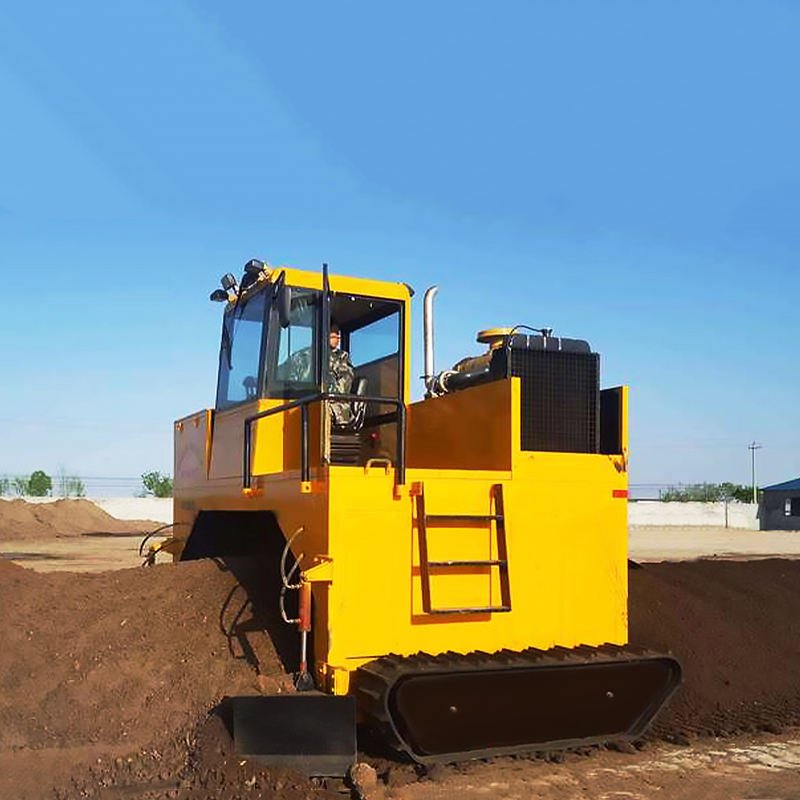
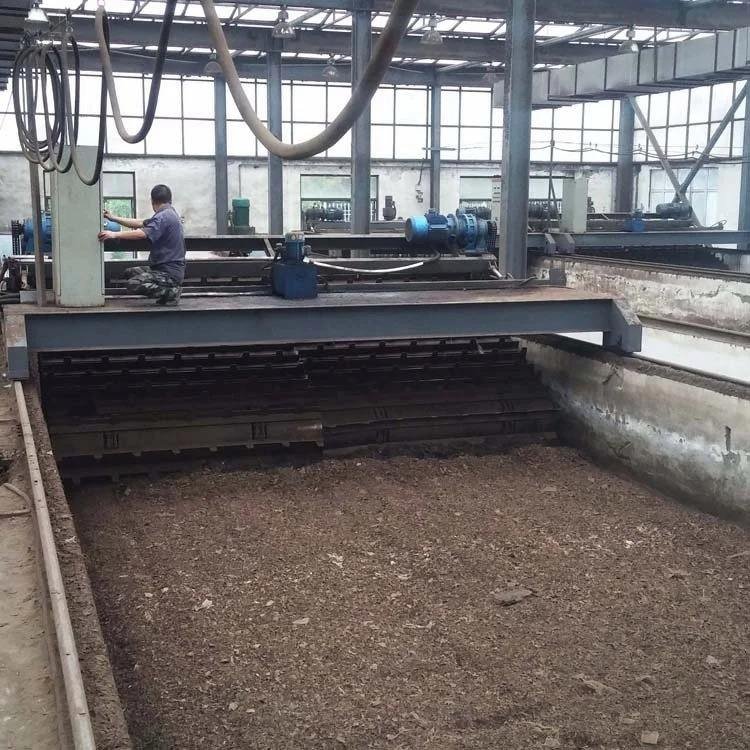
The production process is relatively straightforward: First, raw materials (such as livestock manure, crop straw, etc.) undergo thorough aerobic fermentation using a compost turner to achieve complete decomposition and sanitization. The fermented material is then fed into a semi-wet material crusher for pulverization. Next, a rotary drum screening machine removes any oversized particles to ensure a consistently fine powder. Finally, an automatic packaging scale measures and bags the finished product.

The standout features of this line are its simple process, fewer machines, smaller footprint, and relatively lower initial investment and operational energy consumption. The final product—powdered fertilizer—is well-suited for direct land application, use as a soil amendment substrate, or supply to local small farms and growers. It represents the most direct and economical method for recycling organic waste.

2. Granular Organic Fertilizer Production Line

The granular organic fertilizer production line represents a more advanced and industrialized mode of production. It builds upon the powder line by adding deep processing steps like granulation, drying, cooling, and coating to produce high-quality granular organic fertilizer.

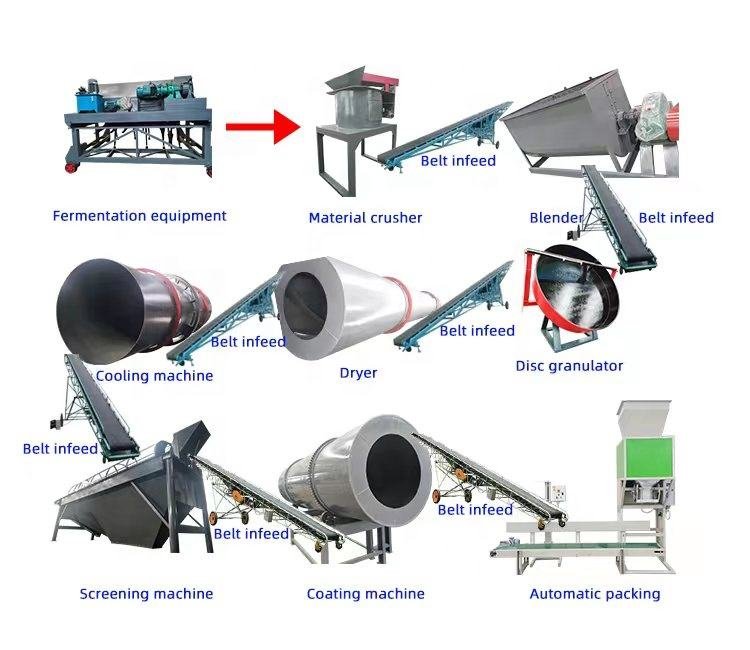
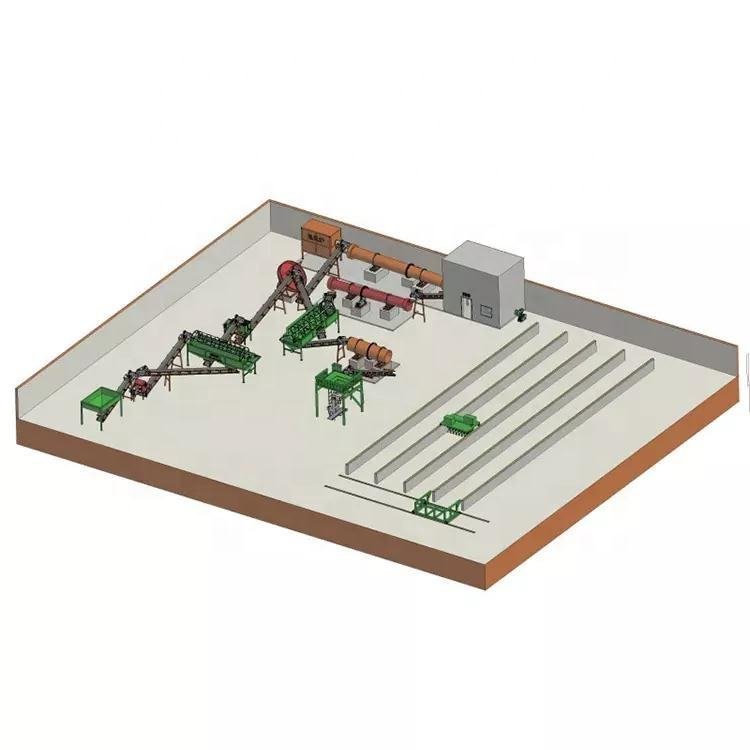
Its production process is more complex: The initial stages are identical—fermentation, crushing, and screening to obtain a uniform powder. This powder is then transferred to a mixer to be blended evenly with other nutrient additives. The mixture is fed into the core equipment—the granulator (such as a disc granulator, rotary drum granulator, or new-type organic fertilizer granulator)—where it is formed into pellets under mechanical force. The resulting wet granules lack sufficient strength and are prone to breaking, so they must sequentially pass through a rotary dryer to reduce moisture and a cooler to lower their temperature and solidify their structure, thereby increasing hardness. To prevent caking during storage and transportation, a coating machine is often used to apply a protective powder layer to the granule surface before final packaging.

The key advantage of this line is its higher-value end product. Granular fertilizer boasts superior physical properties, is dust-free, easier to apply mechanically, and offers improved slow-release effects. These characteristics make it more popular for large-scale planting bases and high-value crop markets, facilitating long-distance transport and brand development. The trade-offs are a larger equipment investment, longer process flow, higher energy consumption, and greater demands on operational expertise.

Summary of Key Differences

  • Final Product Form and Value: The most fundamental difference lies in the product form. The powder line produces powder, while the granular line produces granules. Granular fertilizer typically commands a higher commercial value and market price due to its ease of use, reduced loss, and better appearance.
  • Process Flow and Complexity: The powder process stops at “crushing and screening.” The granular process extends to include a series of complex steps like “mixing, granulation, drying, cooling, and coating,” requiring higher technical complexity and operational stability.
  • Investment and Operational Costs: Due to fewer machines and a shorter process, the powder line requires significantly lower initial investment in厂房 (factory space), equipment, and power, as well as subsequent operational costs, compared to the granular line.
  • Market Positioning and Application: The powder line is better suited for processing one’s own waste, for internal use, or supplying local markets; it is a functional product. The granular line targets a broader commercial distribution market and is a commercialized product for end consumers.

How to Choose the Right Production Line for You?

Your choice should be based on your core needs:

  • If your goal is the low-cost, rapid recycling of organic waste, or primarily to serve your own farm and local small-scale clients, the Powdered Organic Fertilizer Production Line is an ideal choice.
  • If you plan to engage in large-scale commercial production, build a brand, and enter broader distribution channels, then investing in a Granular Organic Fertilizer Production Line to produce high-value-added products will be the necessary choice.

At Yuhheng Technology, we have extensive experience and can provide complete customized solutions—from single equipment to turnkey plant projects—based on your raw material characteristics, output requirements, and investment budget. Whichever path you choose, we can offer professional technical support and reliable equipment guarantees.

For more detailed design plans and quotations, please feel free to contact us. Our expert team is ready to help ensure the success of your project.

Back to Top
Product has been added to your cart